
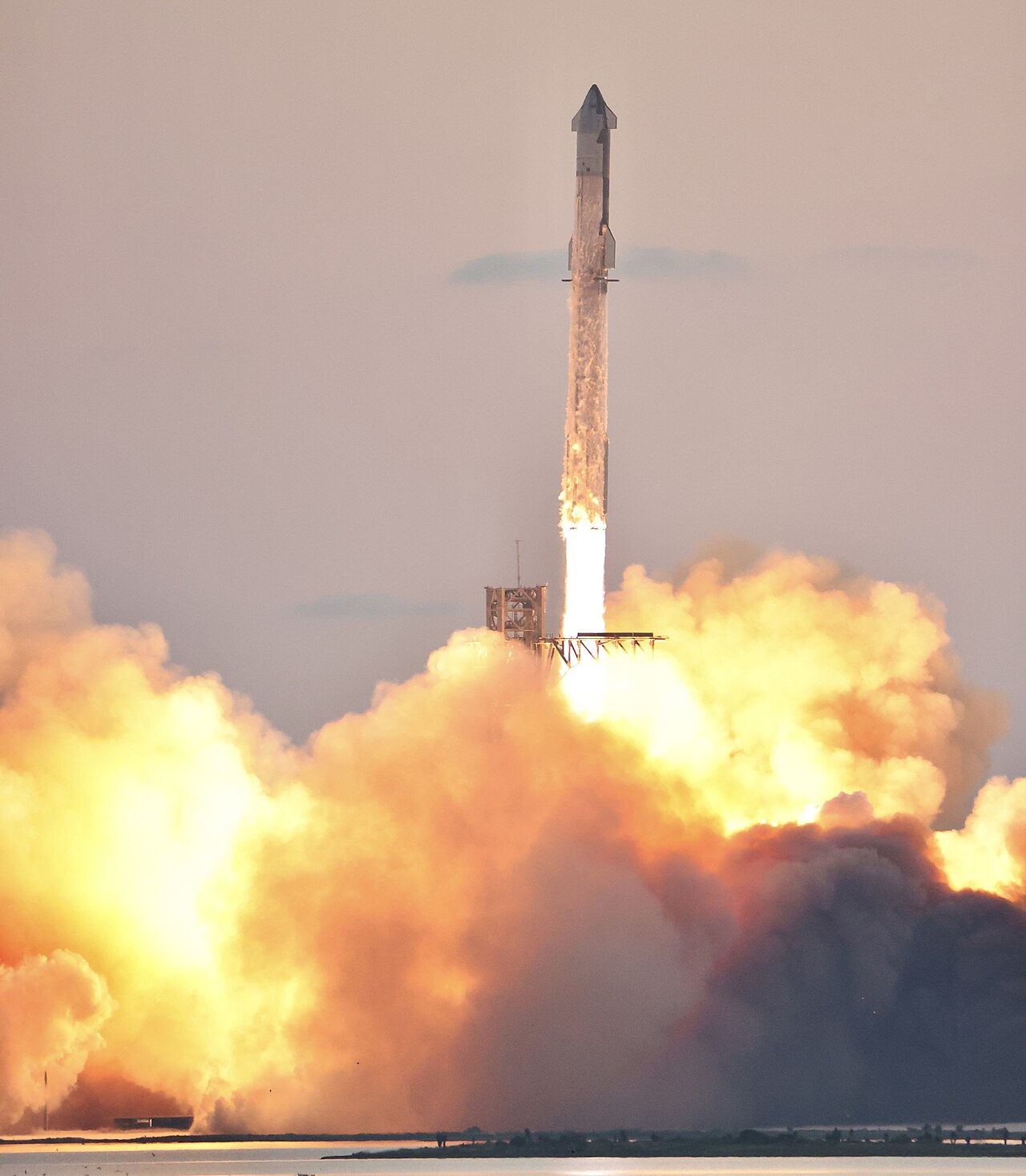

What this is
A Starship is carrying 3 Starlink satellites. They are small radio stations that stay in space and help the internet reach houses, ships, and farms that do not have a cable in the ground. The bottom of the rocket tries to fly home and land so it can be used again.
SpaceX is flying a Starship from Orbital Launch Pad 2, SpaceX Starbase, TX, USA. Mission: Starlink Group 31-2 (Starship Flight 15). 15th test flight of the two-stage Starship launch vehicle and 4th flight of Starship V3. Second Starship flight to deploy satellites (a group of Starlink satellites known as Starlink Group 31-2) into stable and first ever to attempt returning the Starship 2nd stage back to the launch site. The ship is expected to fly at an altitude approximately 275 km above Earth and complete approximately 14 orbits around the planet for more than 22 hours, with the ship expected to attempt returning back to Starbase, Texas on its launch pad by pad arms catching. The booster’s primary test objective on Flight 15 will be executing a successful launch, ascent, , boostback burn, and landing by pad arms catching. This will also be the 1st Starship V3 booster to attempt returning to its launch site. Starship will deliver 26 Starlink V3 satellites to orbit for the second time, which aim to greatly expand the network's capacity and user speeds. Each Starlink V3 satellite will add 1 Tbps of capacity to the constellation. 3 of the satellites have been modified with a suite of cameras to scan Starship’s heatshield and transmit imagery down to operators. Planned orbit: . Status: Launch Successful. The launch vehicle successfully inserted its payload(s) into the target orbit(s). The published time can still slip. Rockets wait for weather, boats, and the range.
From here
Too far to see
You will not see this rocket from Centennial, Colorado. It is about 1,039 miles southeast. The broadcast is the view.
That is too far for the flame and, for almost every launch, too far for the high-altitude plume. Dim the lights and watch together anyway.